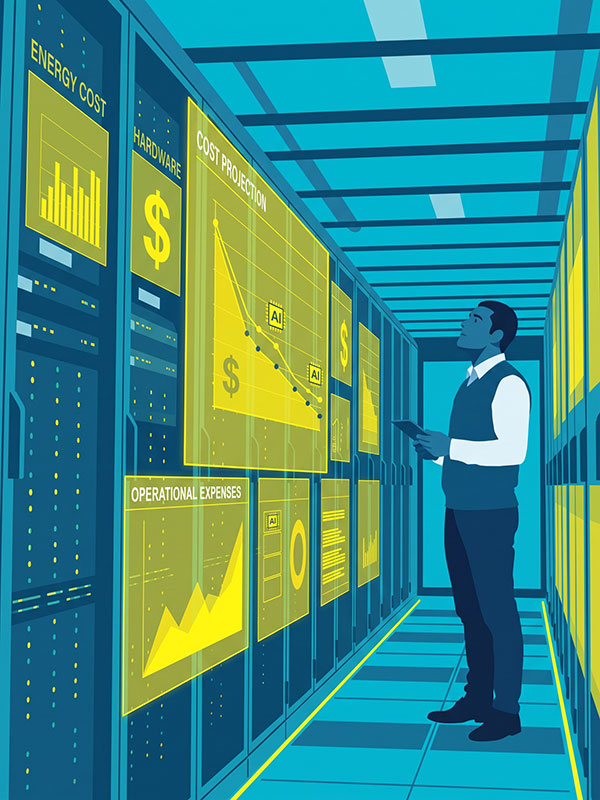
Leaders everywhere are under pressure to get their workforces to adopt AI. But once that hurdle is cleared and teams are excited about what AI can unlock for the organization, what do you do if cost or access shifts?
It’s important to remember that the AI your team is using today sits on a constrained supply chain. Epoch AI research estimates that the two largest AI labs are growing their share of global AI compute faster than the rest of the industry. Power grids are saying no in Ireland, the Netherlands, and Maine. The advanced chip packaging step has 52 to 78 week lead times. Water is contested in Arizona, New Mexico, and Texas. Costs may rise. Access may tighten. The curve people are quietly assuming in their workforce plans is not guaranteed.

Summer Coxe
Consultant

In the midst of that curve, three habits will remain true.
Optimized AI literacy must go beyond “how to write a good prompt” and “how to spot a hallucination.” It must include resilience. That looks like:
Leaders must ask, “What would happen if our AI tool got 30% more expensive next year? What would the team need to adjust? Can they complete core tasks without AI?”
]Blankenship Change Consulting can help you define your literacy gap by mapping underlying skills to your AI workflows. Then, we develop a proactive action plan for potential budget changes. It’s not something that should be left to chance.
Opinions expressed are from an independent consultant.